An Unexpected Call
My mobile buzzes in my pocket. It’s my mum. “Hello,” I say, barely paying attention as I clumsily turn over pieces of tofu frying in the pan. “I’m in the hospital,” she says. “They’ve found something that may or may not be cancer.”
A contraction forms in my chest, my breath tightens, and I feel a rigid sense of calmness. We speak; I say all the right things. But after I end the call and sit on the edge of my bed, a powerful emotion tightens like a physical pain in my chest: fear.
The Issue with Emotions as “Owned” or “Separate”
In the Global North, we’re often taught to see emotions as either separate from us or as something we “own.” These beliefs can shape how we relate to our emotions in unhelpful and unhealthy ways:
- If emotions are “mine,” I may feel responsible or at fault for them.
- If emotions are not “mine,” someone else is responsible for my feeling them, so I blame them.
- If emotions are separate from me, then I may believe I must get rid of them.
- If emotions define me, I may see them as part of my personality, like being “an angry person.”
These views make emotional regulation challenging and can lead us to suppress, reject, or feel overwhelmed by emotions. Over time, these emotions may become “stuck,” leading to numbness, anxiety, or depression.
These views – underpinned by our belief in separation and ownership – make emotional regulation challenging and can lead us to suppress, reject, become numb to or feel overwhelmed by emotions. They can lead to emotions becoming permanent rather than fluctuating, as we can see in anxiety disorders and depression.
A Tantric Approach to Emotions
Tantra is a non-dualistic tradition that understands everything is interconnected—simultaneously part of and separate from everything else. It also teaches that all forms, including non-material forms such as emotions, are sentient, self-aware beings.
What if we approached emotions from this tantric perspective?
Let’s revisit the fear I felt from my mother’s news. From the tantric worldview:
- The source of fear: I would understand that this fear arises not only from news of her ill health but also from all my past experiences with her that have led me to love her—for without that love, I would not feel this fear.
- Expanding perspective: I would understand that this fear is shaped not only by all the people and circumstances that enabled my experiences with my mother but also by those that led my mother to be the person that she is. To have become pregnant with me and to live her life with me. That this emotion of fear is interconnected even to the experiences her parents had, which led to her to be born and to be the person she is. I would see this emotion as both part of and separate from everything else.
- Sentience: As I would understand all forms to be sentient, I would believe that this emotion—fear—to be its is its own being, a Spirit that has come to visit me.
- Attitude: I may understand that a visit from a great Spirit is a rare gift, that it has come to me for a reason and is an opportunity to learn a valuable lesson. I may think it wise to make an offering of gratitude, to listen to what it has come to teach me.
Seeing Emotions as Visiting Spirits
By viewing emotions as interconnected and conscious, we can relate to them differently. Instead of suppressing or rejecting emotions, we can welcome them and listen to their messages.
Taking a tantric approach to your emotions can support us towards:
- A healthier relationship with our emotions. This allows emotions to move naturally and avoids the physical and psychological challenges which occur when our emotions become ‘stuck’ in our bodies.
Why not see if I am right? Next time you experience a strong emotion, use the following tantric technique?
Try This Tantric Practice for Emotional Regulation
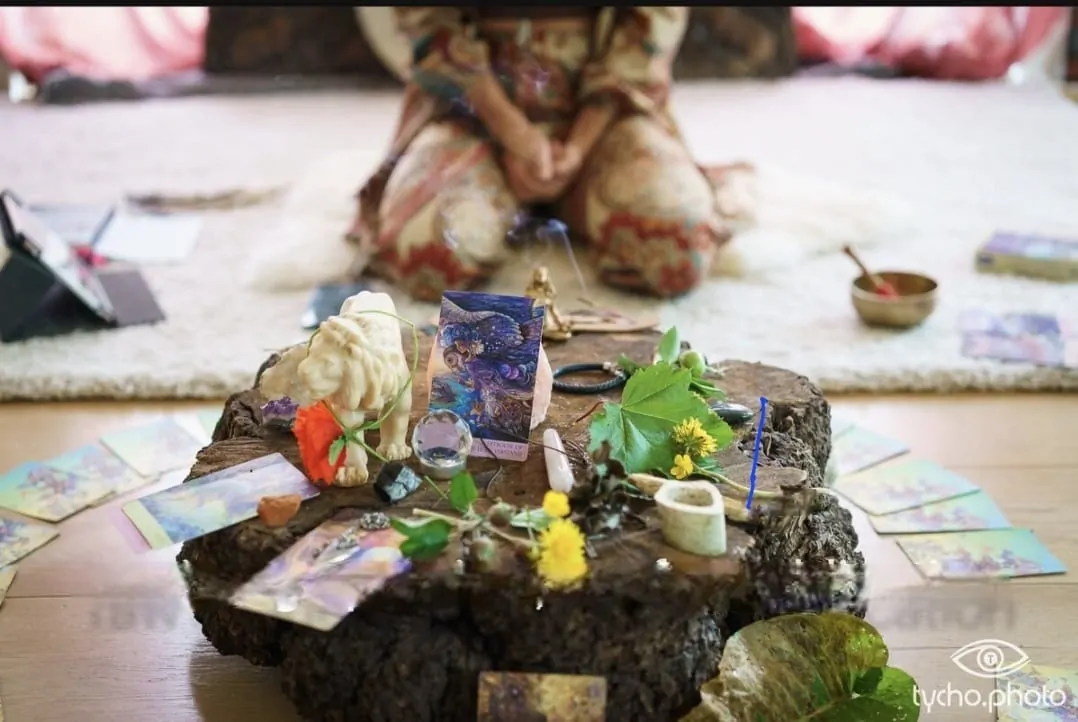
- Choose an Object
Select an object that represents the emotion you’re experiencing. - Create a Quiet Space
Sit as if to meditate in a quiet place, away from the noise of daily life. Place this object before you. - Begin the Ritual by Bowing to the Object
Say the following out loud or in your mind:- Your name
- That you are calling in this emotion
- That you’re grateful it has chosen to visit you
- That you are open to the message it has for you
- Entering an Expanded State
- Stretch your arms horizontally to the sides, thumbs pointing up, fingers curled into fists.
- Inhale deeply through your mouth, filling your belly, chest, and shoulders.
- Hold your breath while tightening your pelvic floor (the muscles you use to stop the flow of urine).
- Draw your stomach in and up toward your solar plexus, keeping your arms extended, thumbs up, and muscles tense.
- Hold this as long as you can.
- When you need to exhale,
- Exhale fully, relax your muscles, lower your arms and release your breath fully through your mouth.
- With your lungs empty, hold your breath for as long as you can while focusing on the object.
- When you need to breathe, let yourself breathe naturally and keep a gentle focus on the object.
- Feel Fully
- Have the intention to listen to the Spirit of the Emotions message.
- Allow yourself to feel the emotion entirely, embracing any discomfort.
- Memories may surface, sensations may arise, and your body may shake or make sounds. Allow this.
- Let go of any need to analyse or understand— messages from the Spirit of the Emotion are seldom literal. Understandings will arrive as felt-senses, images and knowings.
- If your mind wanders, gently bring your focus back to the object.
- Listen with your body.
- Allow whatever needs to move or to be felt or understood to emerge in your body.